
This post contains affiliate links. As an Amazon Associate, I earn from qualifying purchases at no extra cost to you.
When the grid goes down, a portable power station is the quiet, fume-free way to keep the fridge cold, the Wi-Fi on and a phone charged. But “home backup” covers a huge range of needs. Running a router and a CPAP overnight takes a fraction of what it takes to run a well pump, a furnace blower and a refrigerator for two days — and a power station sized for camping won’t touch the second job.
We compared capacity, output, 240V support, expandability, recharge speed and verified owner reviews to find the best power station for home backup on Amazon. Below are five picks from Anker, EcoFlow and Jackery, from a compact 1kWh unit for essentials to whole-home systems that can feed a transfer switch at 240V. We also explain how to size one for your house, so you don’t overpay or come up short in an outage.
Our Top Pick — Anker SOLIX F3800
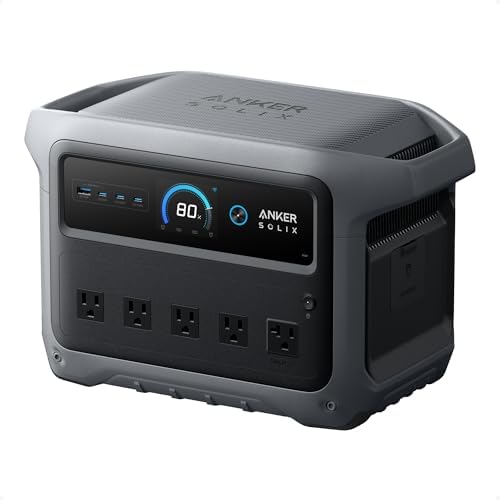
The Anker SOLIX F3800 is the best balance of capacity, power and expandability for most homes. It starts at 3,840Wh with 6,000W of output at 120V or 240V, so it can run a well pump or electric dryer that smaller units can’t. Add battery packs and it grows to 26.9kWh. It also comes with a 5-year warranty, the longest-backed of the big units here alongside EcoFlow.

- 𝗘𝘅𝘁𝗲𝗻𝗱𝗲𝗱 𝗕𝗮𝗰𝗸𝘂𝗽 𝗣𝗼𝘄𝗲𝗿: Add a Smart Generator 5500 for Auto Start-Stop, Hands-Free Runtime
- 𝗘𝗻𝗹𝗮𝗿𝗴𝗲𝗱 𝗖𝗮𝗽𝗮𝗰𝗶𝘁𝘆 𝗙𝗿𝗼𝗺 𝟯.𝟴𝟰𝗸𝗪𝗵: Anker SOLIX F3800 has 3.84kWh to power your family’s needs for one day. If that’s not en…
- 𝗗𝘂𝗮𝗹-𝗩𝗼𝗹𝘁𝗮𝗴𝗲 𝗳𝗼𝗿 𝗔𝗻𝘆 𝗔𝗽𝗽𝗹𝗶𝗮𝗻𝗰𝗲: No more limitations when you’re powering your dryer. The 120V/240V and 6,000W AC output …
Power Station for Home Backup — Quick Comparison

Prices change often — the live price for each pick is shown in the product boxes, pulled directly from Amazon.
Reviews — The Best Power Station for Home Backup
1. Anker SOLIX F3800 — Best Overall
- 𝗘𝘅𝘁𝗲𝗻𝗱𝗲𝗱 𝗕𝗮𝗰𝗸𝘂𝗽 𝗣𝗼𝘄𝗲𝗿: Add a Smart Generator 5500 for Auto Start-Stop, Hands-Free Runtime
- 𝗘𝗻𝗹𝗮𝗿𝗴𝗲𝗱 𝗖𝗮𝗽𝗮𝗰𝗶𝘁𝘆 𝗙𝗿𝗼𝗺 𝟯.𝟴𝟰𝗸𝗪𝗵: Anker SOLIX F3800 has 3.84kWh to power your family’s needs for one day. If that’s not en…
- 𝗗𝘂𝗮𝗹-𝗩𝗼𝗹𝘁𝗮𝗴𝗲 𝗳𝗼𝗿 𝗔𝗻𝘆 𝗔𝗽𝗽𝗹𝗶𝗮𝗻𝗰𝗲: No more limitations when you’re powering your dryer. The 120V/240V and 6,000W AC output …
Key Specs
- Capacity: 3,840Wh LFP; expandable to 26.9kWh with 6 battery packs
- AC output: 6,000W at 120V/240V; 12,000W with two units linked
- Ports: NEMA 14-50 and L14-30 for RVs, EV charging and transfer switches
- App: Wi-Fi and Bluetooth control in the Anker app
- Weight: about 132 lbs (on wheels)
- Warranty: 5 years; Anker rates it for a 10-year lifespan
Who this is for: Homeowners who want one system that can handle 240V appliances today and grow later.
Most portable power stations top out at 120V, which rules out well pumps, electric dryers, some water heaters and central AC air handlers. The F3800 outputs both 120V and 240V and delivers 6,000W continuously, so with a properly installed transfer switch it can power a wide slice of a typical house. The NEMA 14-50 outlet doubles as an EV charger port and an RV hookup, which makes the F3800 useful well beyond outages.
Expandability is the second reason it’s our top pick. At 3.84kWh it covers a day of essentials for many families, and Anker says you can add up to six battery packs for 26.9kWh — or pair two units for 12,000W of output. Anker also sells a Smart Generator 5500 that can auto-start when the battery runs low, turning the F3800 into the core of a hybrid backup system.
The trade-off is size. At around 132 pounds it rolls on wheels but isn’t something you carry up stairs, and 240V whole-home use needs a transfer switch or home panel installed by an electrician. Owner ratings average 4.5 stars across more than 300 reviews.
What we liked:
- 6,000W at 120V/240V runs heavy appliances
- Expandable to 26.9kWh as your needs grow
- 5-year warranty and LFP cells rated for long life
What could be better:
- Very heavy — wheels help, stairs don’t
- Whole-home use needs professional transfer switch installation
- Expansion batteries add significantly to the total cost
Bottom line: The most versatile home backup power station for most households.
2. EcoFlow DELTA Pro 3 — Best for Whole-Home Capacity
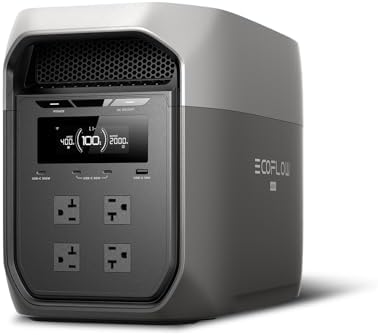
- Energize Almost Everything. The EcoFlow DELTA Pro 3 supports 120V/240V voltage and has a 4000W output (6000W with X-Boos…
- Forget Refueling. Featuring a 4096Wh LFP battery capacity, expandable to 48kWh with extra batteries or smart generators,…
- Plug and Play. Experience hassle-free power with the DELTA Pro 3, a versatile portable power station that’s easy to set …
Key Specs
- Capacity: 4,096Wh LFP; expandable to 48kWh (per EcoFlow)
- AC output: 4,000W at 120V/240V; 6,000W with X-Boost; scalable to 12,000W
- UPS switchover: about 10ms
- Noise: as low as 30dB with X-Quiet
- Charging: 7 methods including AC, solar, gas generator and EV chargers
- Weight: about 115 lbs; 5-year warranty
Who this is for: Homes that see multi-day outages and want the largest expandable system with the quietest operation.
The DELTA Pro 3 is EcoFlow’s flagship home backup unit, and its ceiling is the highest on our list. It starts at 4,096Wh and EcoFlow says it can expand to 48kWh with extra batteries or smart generators, which the company pitches as two to four days of whole-home backup. Like the F3800, it outputs 120V and 240V; EcoFlow says it can run loads such as a 3-ton central AC or a 1HP water pump.
Two features make it pleasant to live with indoors. EcoFlow rates its X-Quiet mode as low as 30dB, quiet enough for a bedroom or home office, and a roughly 10ms switchover means a NAS, desktop or modem typically won’t reboot when the grid drops. It can also tie into EcoFlow’s Smart Home Panel 2 for automatic circuit-level backup.
Its 4.3-star average across more than 700 reviews is a little lower than the others here, and its continuous output (4,000W without X-Boost) is below the F3800’s 6,000W. It’s also the most expensive single unit on this list.
What we liked:
- Largest expansion ceiling at 48kWh
- Very quiet (as low as 30dB) and fast UPS switchover
- Many charging options, including EV chargers
What could be better:
- Most expensive single unit here
- Lower continuous output than the F3800
- Lowest owner rating of our picks
Bottom line: The pick if capacity and quiet matter most and budget comes second.
3. Jackery HomePower 3600 Plus — Best for Easy Setup and Cold Climates
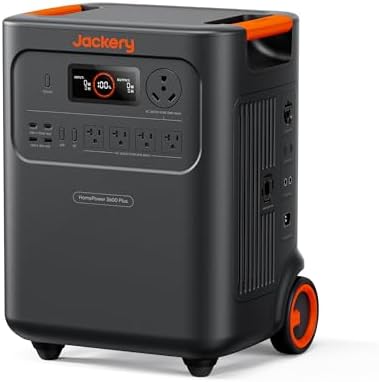
- Essential Home Backup: The Jackery HomePower 3600 Plus delivers 3600W output (7200W in parallel) to run pumps, heaters, …
- Safe Power That Lasts: Built with high-temp resistant ceramic membrane battery cells tested at 302 °F, the Jackery HomeP…
- Plug-and-Play: With its easy plug-and-play design, the Jackery HomePower 3600 Plus, paired with MTS, powers your home ef…
Key Specs
- Capacity: 3,584Wh; expandable to 21kWh per unit (43kWh with multiple units)
- AC output: 3,600W; 7,200W and 240V when two units are paired
- Recharge: 0–100% in about 2 hours with hybrid AC+DC; AC about 2.5 hours; solar about 4 hours
- Battery: rated for 6,000 cycles and a 10-year lifespan; works down to -4°F
- Design: wheels and telescopic handle
Who this is for: Households that want a large plug-and-play backup unit they can roll from the garage to the kitchen, especially in cold regions.
Jackery’s HomePower 3600 Plus is built around simple setup. You plug in appliances directly, or pair it with Jackery’s manual transfer switch (MTS) to feed household circuits. At 3,584Wh it lands close to the F3800 in capacity, and Jackery claims it’s the lightest 3.6kWh LFP power station, with a luggage-style handle and wheels that make it easy to move.
The 3,600W output covers fridges, sump pumps, space heaters and microwaves at 120V. For 240V appliances, you’ll need two units in parallel. Jackery also highlights cold-weather operation down to -4°F and fast hybrid charging that takes it from empty to full in about two hours. It’s shipped and sold by Amazon.com and averages 4.6 stars.
What we liked:
- Large capacity in an easy-to-roll design
- Fast 2-hour hybrid recharge
- Rated for 6,000 cycles and cold-weather use
What could be better:
- 240V only when two units are paired
- Lower output than the F3800
- Fewer owner reviews than smaller Jackery models
Bottom line: The best plug-and-play choice for 120V home backup at this capacity.
4. EcoFlow DELTA 3 Max — Best Mid-Size Pick
- Ultra-Fast Charging, 0–80% in Just 1.13 Hours – Thanks to EcoFlow’s advanced X-Stream technology, DELTA 3 Max can rechar…
- Up to 3400W Continuous X-Boost Mode – Power 99% of Appliances – With an impressive 3400W X-Boost output, this portable p…
- Ultra-Quiet Performance & Rapid 10ms Transfer Time – Designed for home backup, DELTA 3 Max kicks in with less than 10ms …
Key Specs
- Capacity: 2,048Wh LFP
- AC output: 2,400W; up to 3,400W in X-Boost mode
- Recharge: 0–80% in about 1.13 hours (per EcoFlow)
- UPS switchover: under 10ms
- Weight: about 44.8 lbs; 5-year service
Who this is for: Apartment dwellers and smaller homes that need to keep a fridge, internet and a few lights running through overnight outages.
The DELTA 3 Max sits between the compact and whole-home units. With 2,048Wh and 2,400W of output, it can run a typical refrigerator, a router, a TV and phone chargers, and its X-Boost mode lets some higher-wattage appliances run at reduced power. At about 45 pounds, one adult can carry it.
Recharge speed is a highlight: EcoFlow rates 0–80% in just over an hour from a wall outlet, so a short window of grid power during rolling blackouts goes a long way. The sub-10ms switchover protects computers and other sensitive gear. Owners give it 4.7 stars across more than 600 reviews.
What we liked:
- Strong capacity for the size and weight
- Very fast recharge
- High owner rating
What could be better:
- No 240V output
- Not enough for well pumps or central AC
- X-Boost runs some appliances at reduced power
Bottom line: The sweet spot for essentials-only backup.
5. Anker SOLIX C1000 Gen 2 — Best Budget Backup for Essentials
- 49 Min UltraFast Recharging: With upgraded HyperFlash tech, fully recharge at 1,600W—for outage prepping, camping trips,…
- 2,000W Output via 10 Ports: Delivers 2,000W (3,000W peak) and 1,024Wh capacity. Power up to 10 devices—ideal for emergen…
- Compact and Portable: Easily carry, store, and move from room to room, your RV, or even on beach and park outings. C1000…
Key Specs
- Capacity: 1,024Wh LFP; at least 80% after 4,000 cycles (per Anker)
- AC output: 2,000W (3,000W peak); 10 ports
- Recharge: about 49 minutes at 1,600W AC; about 1.8 hours from 600W solar
- UPS: under 10ms switchover
- Weight: about 24.9 lbs
Who this is for: Remote workers and CPAP users who mainly need to keep a few critical devices running.
Not every home needs a 4kWh battery. If your goal is to keep a modem, router, laptop, CPAP machine and some lights running through a typical outage, the C1000 Gen 2 does that for far less money and space. Its under-10ms UPS switchover means connected devices stay on when the power cuts out, and Anker rates a full recharge in about 49 minutes at 1,600W.
At about 25 pounds it moves easily from room to room, and its 2,000W output can briefly run a microwave or coffee maker. It averages 4.7 stars across more than 1,600 reviews. For a full-size fridge plus everything else over a long outage, step up to the DELTA 3 Max.
What we liked:
- Most affordable way into reliable UPS backup
- Very fast recharge
- Light and easy to move
What could be better:
- 1kWh won’t run a fridge for long
- No expansion
- No 240V
Bottom line: The best value if you only need to protect essentials.
How to Choose a Power Station for Home Backup
Add up what you actually need to run
Start with the devices that matter in an outage: refrigerator, internet, lights, phone and laptop chargers, maybe a CPAP, sump pump or furnace blower. Check each appliance’s label for watts. Your power station needs enough output (W) to run them at the same time and enough capacity (Wh) to run them for as long as the outage lasts. A good rule of thumb is to add a 20% buffer.
Decide whether you need 240V
Well pumps, electric dryers, some water heaters and central AC often need 240V. Only the Anker F3800 and EcoFlow DELTA Pro 3 offer 240V from a single unit; Jackery’s 3600 Plus needs two units paired. If you only need 120V appliances, a mid-size unit will save you a lot.
Plan the connection: plug-in or transfer switch
The simplest approach is plugging appliances straight into the power station with extension cords. Powering household circuits requires a transfer switch or smart home panel installed by a licensed electrician. Never back-feed a home through a dryer outlet — it’s dangerous for you and for utility workers.
Look for UPS switchover
A switchover of around 10ms means devices like computers, modems and CPAP machines stay powered when the grid drops. All five picks advertise UPS-style switchover.
Think about recharging during long outages
Solar panels let you recharge during multi-day outages, and some units accept a gas generator too. If you’re also buying for camping, our guide to the best solar generator for RV trips covers panel-and-battery kits.
Track your energy use before you buy
The easiest way to size a power station is to measure. Plug key appliances into one of the best smart plugs with energy monitoring for a few days to see how many watt-hours they really use. And while you’re prepping for outages, a smart water leak detector helps catch a failing sump pump early.
Frequently Asked Questions
What size power station do I need for home backup?
For essentials like a fridge, internet, lights and chargers through an overnight outage, around 2kWh is a practical starting point. For multi-day outages or 240V appliances, look at 3.5–4kWh units that can expand, like the Anker F3800 or EcoFlow DELTA Pro 3.
Can a portable power station run a refrigerator?
Yes. A full-size fridge typically needs a few hundred watts while running, plus a higher startup surge. Every pick here except the 1kWh C1000 Gen 2 can comfortably run one for many hours; the C1000 can run one for a shorter period.
Can a power station power my whole house?
Partially. Large 240V units like the F3800 and DELTA Pro 3, connected through a transfer switch or smart panel, can run many household circuits. Whole-home backup for days usually requires expansion batteries and careful load management.
Is a power station better than a gas generator for home backup?
Power stations are silent, produce no fumes and can be used indoors, and they switch over instantly. Gas generators provide more runtime per dollar for long outages. Some owners combine both, using the generator to recharge the power station.
Can I use a power station for a CPAP during outages?
Yes. A unit with UPS switchover, like the Anker C1000 Gen 2 or EcoFlow DELTA 3 Max, can keep a CPAP running through the night. Check your CPAP’s power draw and whether humidifier use increases it.
How long does a home backup power station last?
Most picks here use LFP batteries rated for thousands of charge cycles. Jackery rates the HomePower 3600 Plus for 6,000 cycles, and Anker rates the C1000 Gen 2 to keep at least 80% capacity after 4,000 cycles.
Do I need an electrician to connect a power station to my home?
Only if you want to power household circuits directly. Plugging appliances into the power station needs no installation. A transfer switch or smart home panel should be installed by a licensed electrician.
Can I charge a home backup power station with solar panels?
Yes. All five picks accept solar input, which lets you recharge during long outages. Charging speed depends on panel wattage and sunlight.
Is 240V output necessary for home backup?
Only for 240V appliances like well pumps, electric dryers and some HVAC equipment. If everything you need runs on standard 120V outlets, a 120V unit is enough.
Final Verdict
For most homes, the Anker SOLIX F3800 is the best power station for home backup thanks to 6,000W at 120V/240V and room to expand. Choose the EcoFlow DELTA Pro 3 for the largest expansion ceiling and quietest operation, or the Jackery HomePower 3600 Plus for easy plug-and-play 120V backup. For essentials only, the EcoFlow DELTA 3 Max is the mid-size sweet spot and the Anker SOLIX C1000 Gen 2 is the budget pick.
- 𝗘𝘅𝘁𝗲𝗻𝗱𝗲𝗱 𝗕𝗮𝗰𝗸𝘂𝗽 𝗣𝗼𝘄𝗲𝗿: Add a Smart Generator 5500 for Auto Start-Stop, Hands-Free Runtime
- 𝗘𝗻𝗹𝗮𝗿𝗴𝗲𝗱 𝗖𝗮𝗽𝗮𝗰𝗶𝘁𝘆 𝗙𝗿𝗼𝗺 𝟯.𝟴𝟰𝗸𝗪𝗵: Anker SOLIX F3800 has 3.84kWh to power your family’s needs for one day. If that’s not en…
- 𝗗𝘂𝗮𝗹-𝗩𝗼𝗹𝘁𝗮𝗴𝗲 𝗳𝗼𝗿 𝗔𝗻𝘆 𝗔𝗽𝗽𝗹𝗶𝗮𝗻𝗰𝗲: No more limitations when you’re powering your dryer. The 120V/240V and 6,000W AC output …
- Energize Almost Everything. The EcoFlow DELTA Pro 3 supports 120V/240V voltage and has a 4000W output (6000W with X-Boos…
- Forget Refueling. Featuring a 4096Wh LFP battery capacity, expandable to 48kWh with extra batteries or smart generators,…
- Plug and Play. Experience hassle-free power with the DELTA Pro 3, a versatile portable power station that’s easy to set …
- Essential Home Backup: The Jackery HomePower 3600 Plus delivers 3600W output (7200W in parallel) to run pumps, heaters, …
- Safe Power That Lasts: Built with high-temp resistant ceramic membrane battery cells tested at 302 °F, the Jackery HomeP…
- Plug-and-Play: With its easy plug-and-play design, the Jackery HomePower 3600 Plus, paired with MTS, powers your home ef…
- 49 Min UltraFast Recharging: With upgraded HyperFlash tech, fully recharge at 1,600W—for outage prepping, camping trips,…
- 2,000W Output via 10 Ports: Delivers 2,000W (3,000W peak) and 1,024Wh capacity. Power up to 10 devices—ideal for emergen…
- Compact and Portable: Easily carry, store, and move from room to room, your RV, or even on beach and park outings. C1000…
- Ultra-Fast Charging, 0–80% in Just 1.13 Hours – Thanks to EcoFlow’s advanced X-Stream technology, DELTA 3 Max can rechar…
- Up to 3400W Continuous X-Boost Mode – Power 99% of Appliances – With an impressive 3400W X-Boost output, this portable p…
- Ultra-Quiet Performance & Rapid 10ms Transfer Time – Designed for home backup, DELTA 3 Max kicks in with less than 10ms …
See full specs on EcoFlow’s official DELTA Pro 3 page.
Last updated: October 2026 | Prices subject to change.
Questions about any of these picks? Get in touch via our contact page.