
This post contains affiliate links. As an Amazon Associate, I earn from qualifying purchases at no extra cost to you.
You finally decided to upgrade your thermostat. You watched the YouTube video, ordered the smart thermostat, pulled the old one off the wall — and then you stared at a cluster of wires with absolutely no C-wire in sight.
It’s a common story. Most homes built before 2000 were wired for simple two-wire or four-wire thermostat systems. The C-wire — or common wire — is what most modern smart thermostats use to stay powered without straining your HVAC. But millions of homes just don’t have one.
The good news: you don’t need to call an electrician or abandon the upgrade. The best smart thermostat options on this list all work without a C-wire, each using a different approach — power-sharing technology, a bundled adapter kit, or plain old AA batteries. All three are genuinely viable, and which one makes sense depends on your home, your HVAC system, and your budget.
We compared each of these picks on compatibility, install method, verified owner reviews and manufacturer data, including how they handle the older two-wire boiler systems that stump most smart thermostats. Here’s how they stack up.
My Top Pick — Google Nest Thermostat (Snow)
If you want the simplest “install it and forget it” upgrade, the Google Nest Thermostat is the place to start. It uses Google’s power-sharing technology to draw a trickle of power from your existing wires — no C-wire, no adapter, no furnace access required. It just works, from day one.

- ENERGY STAR certified smart thermostat for home that helps you save energy and stay comfortable.Product note: You can al…
- The Nest Thermostat is designed to work without a C wire in most homes, but for some systems, including heating only, co…
- Nest Thermostat turns itself down when you leave, so you don’t waste energy heating or cooling an empty home; easily pro…
Key Specs
- C-wire solution: Power Sharing (draws trickle charge through existing wires)
- Compatibility: Most 24V single-stage heating and cooling systems
- Voice control: Google Assistant, Amazon Alexa
- Display: 2.08″ color display, mirror finish
- Wi-Fi: 2.4 GHz only
- Price tier: Mid-range
Who this is for: Anyone who wants a reliable, Google-native smart thermostat that installs in under 30 minutes without any extra hardware or wiring at the furnace.
The Nest Thermostat is the easiest default recommendation here. The install experience is the smoothest of the three options here — you pull off your old thermostat, match your wires to the labeled terminals on the Nest baseplate, snap the display on, and you’re done. No furnace access required. No adapter kit to wire in. Google’s Compatibility Checker can confirm whether your system will work in about two minutes.
The power-sharing method has one small trade-off worth knowing upfront: on some older HVAC systems, there’s a small chance you’ll notice brief “HVAC chatter” — where the system cycles on for a few seconds to recharge the Nest’s internal battery. Owners report it’s rare, and Nest addresses it in the setup app, but if you have an older boiler or variable-speed system, check compatibility first.
The display is genuinely nice. The mirror-finish surround looks more expensive than its mid-range price suggests, and owners describe the color touchscreen as responsive and clear in any lighting. Owners say setting up a schedule in the Google Home app takes about ten minutes — drag and drop, nothing buried in sub-menus. Reviewers often mention that other people in the household figure it out without any help.
Highlights:
- Power sharing works as advertised — no C-wire, no furnace access, full stop
- Google Home and Alexa both work; owners report voice control is live within 20 minutes of install
- The mirror display looks legitimately premium; reviewers often say guests ask what it is
- The mid-range price is a genuine sweet spot — full smart features without paying for the Nest Learning Thermostat’s AI
What could be better:
- No room sensor compatibility with this model (room sensors work only with the pricier Nest Learning Thermostat)
- Owners report the Google Home app can take 10–15 seconds to reflect a manual thermostat change
- 2.4 GHz only — no 5 GHz support (rarely matters for a thermostat, but worth noting)
Bottom line: The best smart thermostat for most people who don’t have a C-wire. It’s the easiest install, the cleanest interface, and the best value at this price.
2. Ecobee Smart Thermostat Enhanced — Best for Smart Home Enthusiasts
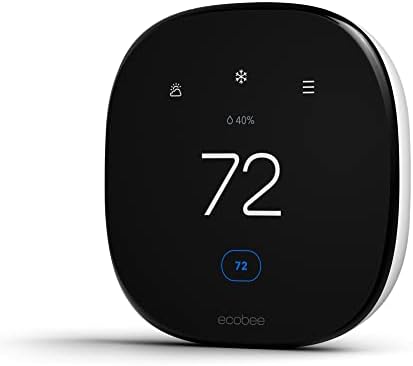
- Save up to 26% per year on heating and cooling costs Automatically adjusts the temperature when you’re away to never hea…
- Compatible with 90% of systems so check your system’s compatibility with our Compatibility Checker on the ecobee support…
- Built-in radar occupancy preheats or precools your home before you arrive so it’s the perfect temperature the moment you…
Key Specs
- C-wire solution: Power Extender Kit (PEK) — included in box
- Compatibility: 90% of HVAC systems (use ecobee’s online Compatibility Checker)
- Voice control: Amazon Alexa built-in, Apple HomeKit, Google Assistant, SmartThings
- Display: 3.5″ color touchscreen
- Built-in occupancy sensing: Radar-based (detects presence without wires or sensors)
- Wi-Fi: 2.4 GHz
- Price tier: Premium
Who this is for: Smart home enthusiasts who want Alexa built-in (not just “works with Alexa”), Apple HomeKit compatibility, and the most detailed energy reporting in this roundup.
The Ecobee Enhanced takes a different approach to the C-wire problem. Instead of software tricks, it comes with a physical Power Extender Kit — a small adapter that you wire into your furnace’s control board, creating a proper C-wire connection that your system didn’t have before.
Here’s why that’s a bigger deal than it sounds: the PEK gives the Ecobee a stable, dedicated power source. No HVAC cycling, no trickle-charge trade-offs, no compatibility edge cases. You do the wiring once, and it’s done permanently. The Ecobee app walks you through the furnace wiring step by step with photos of real furnace boards (not vague diagrams), and owners typically report the whole process takes about 45 minutes, even for first-timers who’ve never opened a furnace panel before. If you’ve ever replaced a light switch, this is easier.
The 3.5-inch touchscreen is meaningfully larger than the Nest’s display, and reviewers describe it as faster too. Swipe left for schedule, right for usage reports, tap the top for quick temperature control. Owners frequently mention the usage breakdown turning up surprises — like the HVAC running far longer than expected in the early afternoon because of direct sun on one side of the house — and adjusting the schedule to cut that runtime significantly.
The feature reviewers mention most: Alexa is built directly into the thermostat. Not “works with Alexa through your phone” — Alexa lives in the device. You can ask it for the weather, set timers, check your shopping list, and control any other Alexa device in your home just by talking to the thermostat from across the room. At its premium price, you’re essentially getting a smart thermostat plus a partial Echo replacement.
Highlights:
- PEK is more reliable than power stealing — zero HVAC cycling after setup
- Alexa built-in is genuinely useful, not just a bullet point
- The touchscreen is the largest in this category at this price, and owners call it fast, accurate and clear
- Radar occupancy sensing learns your schedule passively; it starts saving energy before you’ve set anything
- Supports Apple HomeKit, Google Assistant, Alexa, SmartThings — widest ecosystem compatibility here
What could be better:
- The PEK install requires furnace panel access — not ideal if you rent and the furnace is in a locked utility room
- It costs noticeably more than the Nest; if you don’t care about Alexa built-in or HomeKit, that’s a hard sell
- Ecobee’s app is feature-rich but takes longer to learn than the Nest app
Bottom line: The best smart thermostat for smart home enthusiasts willing to spend 45 minutes at the furnace once. The Alexa integration and occupancy sensing alone justify the price if you’re already invested in Amazon or Apple ecosystems. See full compatibility details on Ecobee’s official site.
3. Emerson Sensi ST55 — Best Budget Pick

- PRIVACY PROTECTION*: Sensi won’t sell your personal information to third parties
- EASY DIY INSTALLATION: Use the built-in level and step-by-step app instructions for a quick installation. Works with HVA…
- SAVE ABOUT 23% ON HVAC ENERGY*: The ENERGY STAR-certified Sensi smart thermostat can help you save energy with features …
Key Specs
- C-wire solution: 2 AA batteries — no C-wire, no adapter, no furnace access
- Compatibility: Works with most 24V systems AND 2-wire boiler systems
- Voice control: Amazon Alexa, Apple HomeKit, Google Assistant, Samsung SmartThings
- Display: Backlit LCD, push-button interface
- Power: 2 AA batteries (typically 1–2 years per change)
- Price tier: Budget
Who this is for: Renters, budget shoppers, or anyone with a 2-wire heating-only system that’s made every other smart thermostat incompatible.
The Sensi ST55 is the no-drama pick. It runs entirely on two AA batteries. There’s no power-sharing technology, no adapter, no furnace wiring — just a standard battery slot. Pull your old thermostat off the wall, match the wires using the Sensi app’s step-by-step guide (which shows photos, not just letters), drop in two AAs, and you’re connected to Wi-Fi in under 20 minutes. Owners commonly report installs of around 18 minutes.
The reason this matters most for 2-wire systems: homes with hot water baseboard heating (common in the Northeast and in older buildings) often run only two thermostat wires. Most smart thermostats won’t work with them at all — they need at least four wires to borrow power and control both heating and cooling stages. The Sensi ST55 doesn’t need power from the wires, period. Multiple reviewers with 2-wire boiler systems report running on the original batteries for two-plus years.
The design is traditional — flat rectangular panel, LCD screen, physical buttons. It’s not going to impress anyone at a dinner party. But it fits flush in the space your old thermostat occupied without any wall patching or an adapter plate, which matters more for renters who need to restore the original when they move out. It looks like a slightly nicer version of whatever was already on the wall.
The app is clean and gets the job done. Scheduling is drag-and-drop. You get daily runtime reports. No monthly subscription is required — which, given how many smart home devices have drifted toward recurring fees, is worth calling out explicitly. (For another subscription-free smart home option, our smart plugs with energy monitoring guide covers similar ground.) Alexa, Google Assistant, Apple HomeKit, and Samsung SmartThings all work without any paid tier.
Highlights:
- Battery power means it works in any home with any wiring — including 2-wire boiler systems
- Owners report ~18-minute installs with zero furnace access — renters can remove it cleanly when they leave
- A long-running model with a large base of owner reviews — this thermostat has a serious track record
- No subscription. Ever.
- Samsung SmartThings support at this price is rare
What could be better:
- The LCD display is functional but noticeably dated compared to the Nest and Ecobee touchscreens
- Energy reports are basic — total run time only, no breakdown by heating vs. cooling mode
- No built-in occupancy sensing; scheduling requires manual input
Bottom line: The most forgiving smart thermostat on this list. If you’re renting, on a budget, or have a 2-wire system that’s defeated every other thermostat you’ve tried, the Sensi ST55 is the one that will actually work.
How to Choose a Smart Thermostat Without a C-Wire
What Is a C-Wire, Anyway?
The C-wire (common wire) provides a continuous 24V power supply from your HVAC system to your thermostat. Old-school thermostats only needed power when they were actively switching your system on — so most pre-2000 wiring didn’t include a dedicated C-wire. Smart thermostats are essentially mini computers with Wi-Fi chips, color screens, and sensors that run 24/7, so they need constant power, not just a burst when they’re switching things.
If you look at your old thermostat’s terminal block and see only two wires (commonly labeled R and W for heating-only systems, or R and Y for cooling-only), or four wires without anything connected to a terminal labeled C or COM — your home doesn’t have a C-wire routed to the thermostat. That’s not a dealbreaker. It just means you need one of the three approaches above.
Three Solutions, Three Trade-Offs
Power sharing (how the Nest does it): The thermostat draws a tiny trickle of current through whichever wires it’s using to control your HVAC. No hardware changes, no furnace access, no tools beyond a screwdriver to mount the baseplate. The downside is a small compatibility risk with very old or unusual HVAC equipment — about 10% of systems have a quirk that causes brief “chatter” while the battery charges.
PEK adapter (how the Ecobee does it): A small wiring adapter ships in the box. You open your furnace or air handler panel, relocate one wire, and plug in the adapter — this creates a real C-wire connection that the thermostat uses going forward. More work upfront, but the most stable solution long-term. Compatible with 90%+ of systems. Not ideal if you can’t access your furnace.
Battery power (how the Sensi ST55 does it): No electrical solution at all. Two AA batteries run everything — Wi-Fi, display, scheduling, and all the smart features. Works regardless of how your home is wired. Works with 2-wire systems. Battery life is typically 1–2 years. The only downside is a slightly dated form factor and simpler energy reporting.
This is actually the same triage logic as choosing a smart light switch for an older home without a neutral wire — there’s a hierarchy of solutions from “zero wiring changes” to “minor wiring at the panel,” and the right one depends on your specific setup.
What Renters Need to Know
If you’re renting, the Sensi ST55 is the clearest pick. It runs on batteries, requires no furnace access, and comes off the wall in under five minutes when you move out — no trace that it was ever there. The Google Nest’s power-sharing is non-invasive too, but some leases are vague about thermostat replacement, and “changing the thermostat wiring” could be interpreted differently by different landlords.
The Ecobee’s PEK install is the most involved — it requires opening the furnace or air handler panel. If your building’s furnace is in a shared utility room or your lease specifically prohibits HVAC modifications, this isn’t the right pick for your situation.
One bigger renter question first: what type of heating do you have? If your apartment uses electric baseboard heaters (240V systems), none of these thermostats will work — they’re all designed for 24V forced-air or hydronic systems. If you have forced-air gas heat, forced-air electric heat, or a hot water boiler, you’re good to go with at least one of these.
Related Smart Home Guides
- Best Air Purifier for Bedroom — comfort beyond temperature
- Best Smart Plugs with Energy Monitoring — track energy use
- Best Smart Smoke Detector — safety on the same app
Frequently Asked Questions
What is a C-wire on a thermostat?
The C-wire (common wire) provides continuous 24V power from your HVAC system to your thermostat. Older systems often don’t have one because traditional thermostats only needed power when actively switching the system on. Smart thermostats need constant power to run Wi-Fi and displays, which is why C-wire compatibility matters.
Can I install a smart thermostat without a C-wire?
Yes — all three thermostats on this list work without one. The Google Nest uses power-sharing technology. The Ecobee Enhanced ships with a Power Extender Kit that creates a C-wire connection at your furnace. The Emerson Sensi ST55 runs entirely on AA batteries and doesn’t need power from your wiring at all.
Does the Google Nest Thermostat work without a C-wire?
Yes. The Nest Thermostat uses Google’s power-sharing technology, which draws a trickle charge through your existing wires. No furnace access required, no adapter kit needed. Works on most standard 24V heating and cooling systems. Use Google’s free Compatibility Checker before ordering to confirm your specific system.
Does the Ecobee work without a C-wire?
The Ecobee Smart Thermostat Enhanced doesn’t require an existing C-wire — it includes a Power Extender Kit (PEK) in the box that creates the C-wire connection at your furnace. You’ll need to open your furnace panel and reconnect two wires, which takes 20–45 minutes but only needs to happen once.
How do I know if my home has a C-wire?
Pull your old thermostat off the wall and look at the wire terminals. If you see a wire connected to a terminal labeled C or COM, you have a C-wire. If you only see 2–4 wires without one going to a C terminal, or if a wire is coiled up and unused behind the wall plate, your home likely doesn’t have one connected. All three thermostats on this list handle that situation.
Will a smart thermostat work with only 2 wires?
Most won’t — but the Emerson Sensi ST55 will. It runs entirely on batteries and doesn’t need any power from your thermostat wiring, which makes it compatible with older 2-wire boiler systems that defeat almost every other smart thermostat. The Google Nest and Ecobee both need at least 4 wires to work properly.
What is the cheapest smart thermostat that doesn’t require a C-wire?
The Emerson Sensi ST55, our budget pick, is the most affordable option on this list, and the one most likely to work regardless of your wiring situation. It runs on 2 AA batteries, supports Alexa, Google Assistant, and Apple HomeKit, and has a long track record with owners. It’s also the best option for renters who need something that leaves no trace when removed.
Is a smart thermostat worth it if I rent?
Usually yes, if your lease allows it. The Sensi ST55 is specifically designed for easy removal — no furnace access, no wall damage, off and on in under 20 minutes. Smart scheduling and remote control can reduce your energy use meaningfully even if you’re only in the apartment for a year or two. That said, if your building controls your HVAC centrally or if you have electric baseboard heating, a smart thermostat won’t help.
Final Verdict
The best smart thermostat without a C-wire isn’t a single answer — it depends on your situation. For most people, the Google Nest Thermostat is the right call. It’s the easiest install by a long margin, looks great on the wall, and delivers everything a smart thermostat should without touching your furnace. If you want Alexa built-in, Apple HomeKit, and the most advanced energy tracking in this roundup, the premium-tier Ecobee Smart Thermostat Enhanced is worth the extra spend — once you’ve spent 45 minutes at the furnace doing the PEK install. And if you’re renting, on a tight budget, or dealing with an older 2-wire system, the budget-tier Emerson Sensi ST55 is the one that will actually work when others don’t.
- PRIVACY PROTECTION*: Sensi won’t sell your personal information to third parties
- EASY DIY INSTALLATION: Use the built-in level and step-by-step app instructions for a quick installation. Works with HVA…
- SAVE ABOUT 23% ON HVAC ENERGY*: The ENERGY STAR-certified Sensi smart thermostat can help you save energy with features …
- ENERGY STAR certified smart thermostat for home that helps you save energy and stay comfortable.Product note: You can al…
- The Nest Thermostat is designed to work without a C wire in most homes, but for some systems, including heating only, co…
- Nest Thermostat turns itself down when you leave, so you don’t waste energy heating or cooling an empty home; easily pro…
- Save up to 26% per year on heating and cooling costs Automatically adjusts the temperature when you’re away to never hea…
- Compatible with 90% of systems so check your system’s compatibility with our Compatibility Checker on the ecobee support…
- Built-in radar occupancy preheats or precools your home before you arrive so it’s the perfect temperature the moment you…
See full compatibility details on Ecobee’s official site.
Last updated: July 2026 | Prices subject to change.
Questions about any of these picks? Get in touch via our contact page.
Pingback: Best Smart Smoke Detector 2026 — Top 3 Picks
Pingback: Best Smart Light Switches No Neutral Wire 2026